Pay for your fees and charges Pay Now
+233 (0) 243 211 345 info@ama.gov.gh GA-143-6657
Pay for your fees and charges Pay Now
+233 (0) 243 211 345 info@ama.gov.gh GA-143-6657
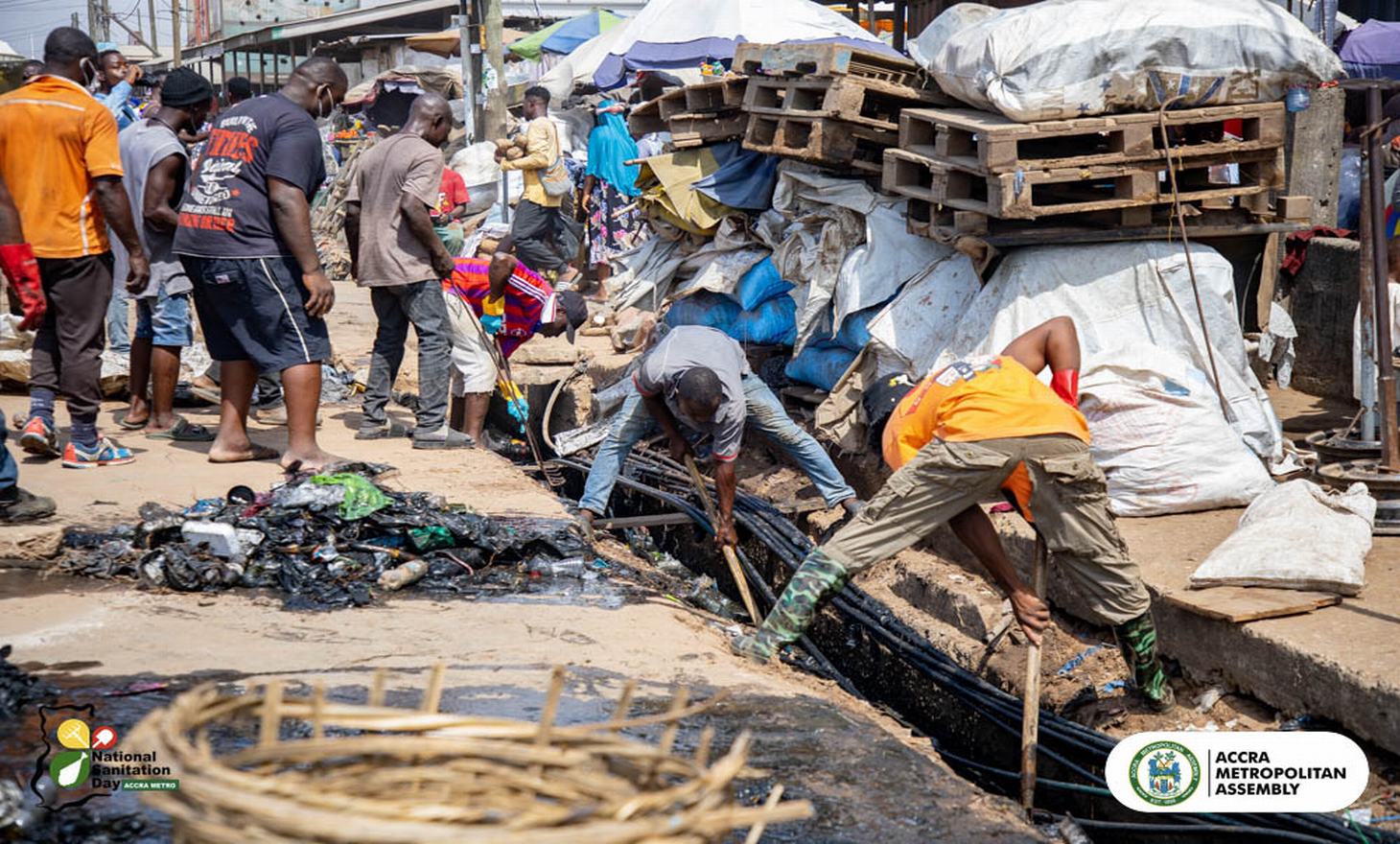
The Accra Metropolitan Assembly (AMA) has announced that the April 2026 edition of the National Sanitation Day clean-up exercise would take place on Saturday, April 18, 2026, with strict enforcement measures to ensure compliance.
According to the Assembly, the exercise, which forms part of its ongoing efforts to improve environmental sanitation and protect public health, is scheduled to begin at 6:00 a.m. and continue until all activities were completed.
In a press release signed by the Head of Public Affairs, Mr. Gilbert Nii Ankrah, the AMA stated that the clean-up exercise would focus on selected areas across the metropolis, including Agbogbloshie, the Central Business District (CBD), Guggisberg Avenue, Tuesday Market, Chorkor, Kaneshie, the Kwame Nkrumah Interchange and their environs.
The day’s activities, the Assembly explained, were to include sweeping of streets, clearing of road curbs, removal of unauthorised banners, and general cleaning of public spaces as part of measures to improve environmental conditions and promote a cleaner city.
The AMA emphasised that enforcement would be a key component of the exercise and urged residents, traders, transport operators, shop owners and all persons within the affected areas to participate fully to avoid sanctions or prosecution for sanitation-related offences.
The Assembly further indicated that Assembly Members would lead clean-up exercises in their respective electoral areas to ensure effective coordination and encourage active community participation.
The AMA, therefore, called on all residents and stakeholders to come out in their numbers to support the exercise and demonstrate a shared commitment to building a cleaner, healthier, and more orderly Accra.
The Assembly also appealed to the public to maintain proper waste disposal practices at all times, noting that sustained environmental cleanliness was essential to preventing disease outbreaks, preserving public spaces, and improving the image of the national capital.
 16 hours ago
 2 days ago

The Accra Metropolitan Assembly (AMA) is one of the Two Hundred and Sixty-One (261) Metropolitan, Municipal and District Assemblies (MMDAs) in Ghana and among the Twenty-Nine (29) MMDAs in the...Read More...
H72, Independence Avenue, Kinbu Garden
Digital Address: GA-143-6657
P. O. Box GP 385, Accra Central, Accra, Ghana
©Copyrights 2026 Accra Metropolitan Assembly. All rights reservedDeveloped by Akorsetec