Pay for your fees and charges Pay Now

+233 (0) 243 211 345 info@ama.gov.gh GA-143-6657
Pay for your fees and charges Pay Now
+233 (0) 243 211 345 info@ama.gov.gh GA-143-6657

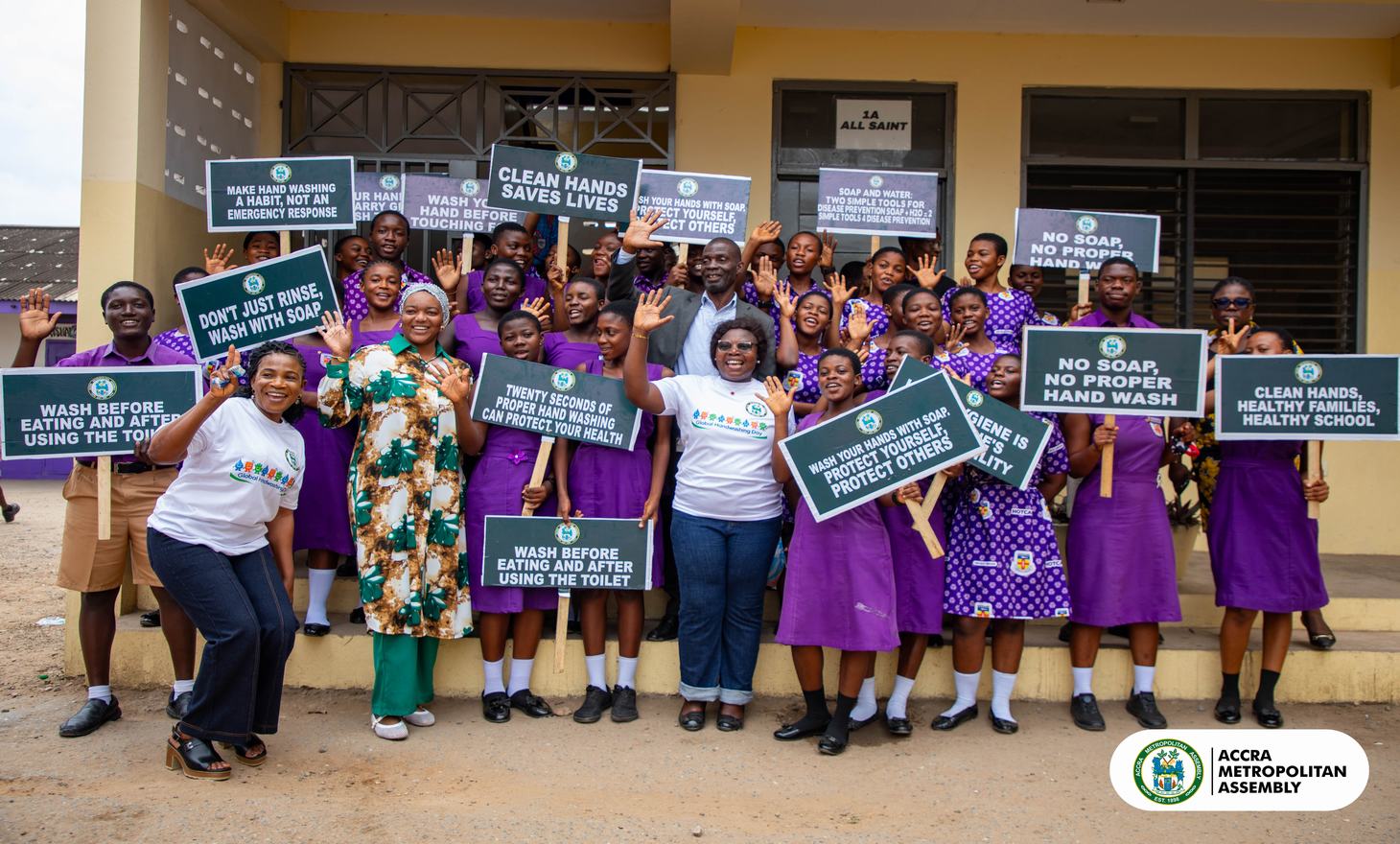
The Accra Metropolitan Assembly (AMA) has organised a health education programme for students at Holy Trinity Cathedral Senior High School (HOTCASS) in Accra to promote proper handwashing practices and prevent the spread of infectious diseases.
The programme, held on Thursday, October 15, 2026, through the Public Health Department of the Assembly, in collaboration with the Ghana Health Service (GHS), to commemorate Global Handwashing Day, formed part of efforts to strengthen personal hygiene practices among young people and encourage behavioural change towards disease prevention.
The forum featured practical demonstrations and interactive sessions designed to equip students with knowledge of effective handwashing techniques, the importance of using soap and clean running water, and the critical moments when handwashing was necessary.
After the forum, the Head of the AMA Public Health Department, Madam Florence Kuukyi, stressed the importance of regular, proper handwashing as one of the simplest and most effective measures for preventing communicable diseases.
She said the Global Handwashing Day, observed annually on October 15, was established in 2008 to raise awareness of the importance of handwashing with soap and encourage individuals, institutions, and communities to adopt good hygiene practices.
Madam Kuukyi emphasised that effective handwashing required more than merely rinsing the hands with water, explaining that individuals must use soap and clean running water and scrub their hands thoroughly for at least 20 seconds to remove germs and reduce the risk of infections.
She said research had demonstrated that proper handwashing with soap could reduce diarrhoeal diseases by about 40 per cent and respiratory infections by approximately 20 per cent, making the practice an important first line of defence against preventable illnesses.
She reiterated that the combination of clean water, soap, and at least 20 seconds of thorough handwashing was essential to achieving clean hands and reducing the transmission of disease-causing germs.
The Deputy Chief Nursing Officer of the Accra Metro Health Directorate, Madam Helena Sowa, said the collaboration between the GHS and the AMA was intended to reinforce good hygiene practices among students and improve awareness of the relationship between hand hygiene and disease prevention.
She said the engagement had provided an opportunity to educate the students on why handwashing was necessary, how it should be performed, and the appropriate times to wash their hands.
A student of the school, Master Gabriel Nii Kotey Kotei, expressed appreciation to the AMA and the Ghana Health Service for the educational programme, describing it as an important opportunity to deepen his understanding of personal hygiene.
He said the exercise had taught him that failure to wash hands properly could expose individuals to preventable illnesses, including diarrhoea, typhoid fever, and some respiratory infections.
He explained that students sometimes neglected handwashing because they were hungry, in a hurry, or eager to participate in other activities without considering the potential health consequences.
 15 hours ago
 yesterday

The Accra Metropolitan Assembly (AMA) is one of the Two Hundred and Sixty-One (261) Metropolitan, Municipal and District Assemblies (MMDAs) in Ghana and among the Twenty-Nine (29) MMDAs in the...Read More...
H72, Independence Avenue, Kinbu Garden
Digital Address: GA-143-6657
P. O. Box GP 385, Accra Central, Accra, Ghana
©Copyrights 2026 Accra Metropolitan Assembly. All rights reservedDeveloped by Akorsetec